Loneliness is and always has been the central and inevitable experience of every man.
—Thomas Wolfe
*******************************************************************
Well, it’s been a while. More than a while since I posted my last blog. It wasn’t random. There were reasons. And I had no clue back then, of what all was coming at me like a freight train. Guess it’s just as well I didn’t know. It would have made me fret. What, Lord? I’m going to be out of order for how long? Ah, come on. Let’s talk about it. Surely we can do better than that. Let’s make a deal. But there was no dealing going on, because I didn’t know. And it’s just as well, I guess, that I didn’t.
Warneke’s, they called it, after my brain woke up from the fog. Some kind of brain condition. I had almost died. Walked right up to the gates. I remember it clearly, the light that shone from within. But I didn’t pass through. I forgot to knock. And next thing I knew, I was back home in my house. Wow, I thought. That was wild.
So here I am. Rubbing my eyes. Wiping the cobwebs from my brain. I’m alive. I’m here. I look around. Poke around. And think about things a little bit.
First thing that comes to mind. I just turned sixty, well, back in August, I did. Sixty. During all those years of turmoil and frantic running, that little number was so far out there that it never entered my mind. I never thought of it. Sixty. That’s getting old, any way you look at it. And I never thought about it much, if at all. Sixty was for old people. That’s not me. It never coalesced in my mind, how fast it was getting here. The years rolled on. I’ve walked through a lot of crap in life, and a lot of good stuff, too. Just walking along. And now, here comes sixty. It’s here. Any way you look at it, that’s just plain wild.
But it is what it is. And so, today, at sixty, I’m thinking to look back a little bit. Feel things again. Remember. Reflect.
And I have to say. There were a few times along the way when I figured my chances to get here were pretty slim. I have walked some hard roads. Stumbled through some deep valleys. The path was rocky and rough. I kept walking. It was all I knew to do. Walk. The wild beasts swooped and howled real close at night. Keep walking, keep plugging on. The light will come. And now, here I stand on that small mountain peak. Sixty. Whatever else happens, I have reached this place. In the passing of time into eternity, it means almost nothing. But at this moment, it seems like there might be a little bit to it. It might even be a big thing.
And so, I stop for a moment and look back. I’m relaxed, but I remember. The hard times, the good times. They all blend together, kind of. And I gotta say. I am humbled and grateful to reach this milestone. And I’m not just saying that. I really am. Because chances were better than not, a few times, that I never would. When I was young, I lived wild and hard and dangerous. In later years, it was my heart that almost gave out. I put a lot of stress on my heart during those early years, from all that hard running. I can see that now. And during that adventure when it almost gave out, I walked right up to a big, bright light. Heaven’s gate, I figured later. And I figured, too. Maybe the reason I didn’t get in was because I didn’t knock. Made sense, when I thought about it. Next time, knock. This time, the realization came too late. It came after I wandered back. And now, here I stand, feet firmly planted on this earth. Keep walking. So I do. It’s a mystery and a marvel, is what it is.
And I can’t help but remember that troubled youth of long ago. How I raged at my father in those years. Raged and swore. And I remember how the troubled youth got up one night and slipped out of the house, clutching a little black duffle bag. How he slipped away before the sun came up. Gone, is what he was. And here I pause a little. Stop and think. See it from today.
It was probably the most brutal thing I ever pulled off. Running away at night when I was a mere child of seventeen. How did that make my parents feel? Especially my Mom. How did she ever cope with that pain, that loss? Her young son had just fled for a new world. Left the warmth of her house, the comfort of her kitchen. Who can ever grasp such a thing? Who can know the pain and the loss? No Mom should ever have to go through such a thing as that. A universal truth, right there. No Mom should ever have to go through such a thing as that. No Mom, Amish or English. No Mom, ever.
Well. My Mom did. And I regret today, looking back. It’s so plain to see. I regret that I tore her heart to splinters. That was a brutal thing to do. Unhuman, if that’s even a word. I know that now. And I bear the burden of that knowledge in my heart.
But a seventeen-year-old boy doesn’t just do such a thing in a vacuum. Stuff is stirring and stumbling around him, somewhere. And I remember how desolate the landscape looked when I returned. It was bleak and rocky and hard. There was little joy anywhere that I could see. There were bears, and they grizzled and growled. Ira is half crazy, is what they thought. Maybe I was. I simmered and chafed. Before many months had passed, I left again. Not at night, sneaking out. This time, it was openly, in the broad light of day.
And that’s how it went.
Today, at 60, I reflect. The strains of an old Conway Twitty song drift through my head:
I can hear my Momma calling.
Look a-yonder, y’all, who’s coming.
Down the road, he’s coming home.
But they know I never will.
I never did. And I feel it deep inside, the sorrow and sadness of those lines. I keep walking. I’m on the road I chose a long time ago. At sixty, I’m on this road. I keep walking. And I wonder sometimes how I ever survived it all.
It was a rough road, high and wild and winding and rocky. Through real wilderness, that road went. I got on it and I walked. And I survived. And here I am. Walking through the gate of sixty. I think it hit me when I got here. A hard little truth. Another decade, maybe sooner, maybe later, and the death angel will come knocking again. This time, he will have his way. I think about that sometimes. I shrug. I am not afraid. It will be what it will be. No memory will remain of me, except for the words I left. And even those words will fade out fast. Before long, no one will know I ever was. That’s just what happens in the flow of life and time.
So here I stand. The prime and passion of youth, both are gone. All of it has run its course.
I know what I know. I know the Lord loves His children. I am His child. I know He will see to His own. And I grasp that knowledge and hold it close in my heart.
YOU ARE WELCOME TO LEAVE A COMMENT BELOW.
Share
The family is a haven in a heartless world.
—Christopher Lasch
_________________
I speak now of many things, of fear and sorrow and loss. And joy, too, mingled in, if you strain hard enough to hear it. A tale of how to walk free, near as I can tell it. The heart can never be chained, nor can the mind. Not if we don’t let it. Life is mostly about choices and their aftereffects, right or wrong. However innocent those choices, sometimes the road is stained with blood and fire. Such is the reality of our world.
The weekend came up, a few weeks back, and I remember how it felt. There was some excitement in the air because the big wedding was coming right up. My nephew, Clifford Wagler, was getting married to his lovely fiancé, Esther King. I was wishing them well, of course, and ready to celebrate. It’s a beautiful thing to see a young couple starting off in life together, all eager and excited. But I was also anticipating a meeting of two distinct and forceful clans. Proud, too, both of them. The Waglers and the Yutzys. Five of my siblings are married to five from that blood. I used to be married to that blood. And a bunch of them were coming in to attend the wedding service and then celebrate with a great feast. That’s what I was really looking forward to, to mingle and mix with family and friends like that. To reconnect and catch up. To speak of events that happened long ago, and of new things, too. Even as we walk through troubled times, we assemble, we gather as family. Because that’s what families do where I come from.
After months and months of insane and arbitrary and deliberately destructive lockdowns, we were ready. We were ready to assemble, we were ready to worship and sing, we were ready to make much noise and celebration at a great wedding feast. Let the bells ring, let the bells ring, as Thomas Wolfe wrote. Let there be exuberance and songs and shouts of great joy. Let the bells ring, let there be life.
And the feeling just shivered through me that Sunday morning. It was a privilege to be alive. I felt grateful. And I felt great. The sun shone bright. At midday, no one imagined that an odd and tragic thing was unfolding right in our community, close to our back yards. Just a few miles from my home. A young Amish girl, Linda Stoltzfoos, vanished as she was walking home from church alone. She disappeared into the daylight. Eighteen years old. The horror of it, the worst nightmare of any parent. It happened to Linda’s parents. They wait for news of their daughter. There has been no news. They are surrounded by their people. Neighbors. Extended family. Friends. From my own sources, I hear that someone is always waiting by the phone shack at Linda’s home, just in case she calls. Twenty-four hours a day, seven days a week, someone sits there at that phone. Waiting. Waiting. Waiting for Linda to call home if she can.
Within days, the story of her disappearance exploded into the national consciousness. Headline news, not that I watch any news. The FBI got involved. So far, nothing. From what we’re told, Linda has simply vanished. They’re hoping the publicity might make her recognizable, somewhere, to someone. So far, no. And now the world waits, too, right along with Linda’s parents and her people.
The reverberations of this tragic incident have deeply shaken the Amish world. There will be new procedures, new protocols. There is talk of holding instructional meetings, to train their people, especially the youth, and especially the young women. Don’t walk alone. If something doesn’t seem right, run to the nearest house. In general, for everyone, always keep a close eye on the children around you. Teach the children to shout and scream and run if someone tries to grab them. Stuff like that is being talked about a lot right now among the Amish at every level all across the spectrum.
The week drifted on, and the first of my family arrived on Thursday morning. I remember seeing schedules, who was coming when and such. I just couldn’t keep it all straight. I figured to take it as it comes. Walk. Enjoy the moment. Live it. Laugh. Love. Anyway, that morning they came walking in at my work office, my sister Naomi and her husband, Alvin Yutzy. They were the first Wagler/Yutzy connection, Alvin and Naomi. They got married a long time ago when Bloomfield was still struggling for identity, and maybe survival. Their wedding wasn’t the first one in the young, upstart settlement. But it wasn’t too far from it.
I looked up and saw them coming through the door and got up to greet them. We shook hands and hugged. The normal small talk. How was the trip? They had flown into Harrisburg from their home in Arkansas. I heard of more people coming into Harrisburg. It’s a nice little airport, you can get in and out a lot faster than you can ever fight your way through a massive behemoth like, say, Baltimore. I took them out into the warehouse for a little tour of the place. Alvin worked construction for many years before retiring, so he knows the field. I showed them the yard, and the scales. We are proud to have our own scales at Graber. Our drivers are never overweight on loads. The local cops know that, and they leave our trucks alone, pretty much.
We chatted and I caught up with family news with Naomi. She recently had a birthday. She turned 70. Seems unreal, that my siblings are crossing such a threshold, but I’m right there, not far behind. Alvin wanted to run down to Delaware that day, to look around. I guess he had never been in that state before. I told them. Let’s meet for supper tonight. Let me know when you get back around. And off they went.
I can’t remember when I last invited people to my house. It just does not happen. And no, it’s not because everything’s a mess. I got a cleaning lady who comes once a month and shines things up. The place is at least respectable, just a bit cluttered, maybe. I don’t invite people much because I don’t feel a need to. No reason, particularly, except I just don’t want to. I figure that’s plenty reason enough.
That evening, that Thursday evening, I got to thinking. The restaurants are still closed around here, or were still closed that night. Our pipsqueak tyrant governor kept inflicting all the damage he could, to crash his state’s economy. A vile, evil little man, Wolf is. Marvin and Rhoda were arriving in the area around six, I think it was. And I thought to myself. Invite them all over to your house, the ones who were around. Alvin and Naomi, and Marvin and Rhoda. I texted Alvin to come over when they could and to give me some warning so I could get some pizza ordered. Well, they arrived then, a little bit later. The warning I had requested never did. I walked outside to greet my guests. Hugs and handshakes all around. Marvin and Rhoda were accompanied by Michael, one of their sturdy sons. We stood around in the yard, and I proudly pointed out my new shiny black metal house roof, recently installed by my Amish contractor friend, Levi, and his crew.
I didn’t get the pizza ordered, I grumbled at Alvin. You never let me know when you’re coming. And right there, I called my friends at Sal’s Pizza, just down the road on the edge of New Holland. I’ve been a regular at Sal’s for a few years, since I went to one meal a day. We’ve formed a relationship over the years, me and the two Italian owners. At some point a few years back, I gave them a copy of Growing Up Amish. Then a while back I snuck in a copy of Broken Roads when no other customers were around. I signed both books, of course, to my friends at Sal’s. I buy from them regularly, and I always call in my order, usually a cheesesteak sub, or some such thing, on the way home from work. Then I drive right over and pick it up. It’s always top notch, the food from Sal’s. So now I called. Two pizzas, Mexican and meat lover’s. And I told the man. I have family here tonight. Do you have some sort of dessert I can feed my guests? Oh, yes, they had cannolis. He’d wrap some up for me.
After some time, Marvin and I headed over to Sal’s in Amish Black II. Just chatting along. It was good to catch up with my old friend. I parked outside and we walked in. The place was busy, mostly with drive-up takeout. We sat on a bench there in the waiting area. One of the owners rang me up. It didn’t sound like he charged me for more than the pizza. The cannolis, I said. I want to pay for those. He grinned at me. The owners at Sal’s speak in accented English. It’s not their native tongue. He pushed the two large pizzas at me over the counter, then handed me a large paper bag that had the end stapled shut. The cannolis. They were on the house. I was startled. He told me. “You take care of us, we take care of you.” I smiled and thanked him. And we walked out of there, Marvin and me, with two large pizzas and a dozen cannolis.
When we got back, everyone was sitting out on my front porch. I don’t get my porch used near enough. That evening, it got used. We gathered in the kitchen, and Alvin blessed the food. You don’t really think about such a thing in the moment, but this was the first time since my last garage party, back in 2017, that anyone prayed any kind of blessing over food for any number of assembled guests. After the prayer, I shepherded everyone through. Paper plates and cups. Real utensils. Eat outside on my old-time porch. We sat and we feasted. The cannolis were a spectacular hit. Homemade, chilled, rich, and delicious, right down to the last scrap. Around 9:00 or so, my guests headed over to Stephen’s house to hang out for a while. I stayed home and went to bed. First day down.
Friday. Moving right along. A regular work day for me. I was leaving early to go pick up BBQ’d pork for the evening meal. I left around 2:30. Hess’s Barbeque over in Willow Street. I pulled in with my Jeep and walked in. The nice ladies at the restaurant pointed me to a building in the back. There, a man met me. I spoke my name, or my brother’s name, and he lugged out two huge bowls. One with potato salad and one with coleslaw. Real Lancaster County concoctions, right there. And then I pulled over to another spot and we loaded a good-sized cooler loaded with hot pulled pork. There were trays and trays of it. I thanked the nice man and headed back north to Leola and my brother’s place. A large crowd would be gathering by now.
And the evening just came at us. Family. From far around. Connected by blood, connected by a common thread to the past, connected by shared journeys. It’s strange sometimes, to think about. A lot of people in the past, you walked with only a few years, then one of you moved on. The flood and flow of life shifts and shakes and moves around a lot. And your paths don’t cross again for many years, sometimes never. When they do, though, you just pick up where you left off. To me, this time, I was eager to see a lot of people, but especially two old friends from long ago. Marvin Yutzy, my brother-in-law, married to my sister Rhoda. And Rudy Yutzy, an uncle to the groom. We’re blood brothers, the three of us, and we were all seasoned members of the original gang of six. We always automatically reconnect when we meet, me and my blood brothers. There’s just a special bond there. The three of us, me and Marvin and Rudy had not hung out together in a while. So that was a big deal to me.
We all gathered over at Stephen’s place, the whole crowd. That first night, people kept trickling in, getting there when they got there. It was totally fine. A very relaxing night. The great feast was set up outside, and we all sat around long tables with our food. It was a beautiful evening, spectacular and clear. There was much visiting going on all night, all around. I meandered back to my house and my bed around eleven, I think it was. Next day would be the big day. The wedding.
The wedding would be in a little church on the edge of Ephrata. The reception would be at JM Lapp, the old silk mill in New Holland. I had never been to either place. I don’t get out much, I guess. I never even knew there was an old silk mill in New Holland. Let alone one that was all set up for fancy wedding receptions. It was a good thing. I just didn’t know about it.
And another detail I hadn’t mentioned. Soon after announcing their engagement, Clifford and Esther asked me a favor. They asked me to MC their wedding. I have to say, I was a little floored. I had done that kind of thing before, but it had been a lot of years. A lot of years. Still. I said yes. I’d be honored to serve as requested. I am delighted, of course. And I didn’t fret about it much, inside. Stayed pretty calm, actually. Since my first book came out, I have spoken in front of many groups, large and small. I don’t get scared, anymore. Sure, you always stay a bit tense when you’re speaking. It keeps you alert. But not scared. Not afraid. It’s just not worth wasting a lot of energy on, such a thing.
Saturday morning. The big day. The wedding was at 2:00. Early afternoon, which I thought was fine. I did my normal Saturday errands. Drank coffee with friends, picked up dry cleaning, shopped for groceries. By noon, I was sitting at my computer, writing. It was time, then, to get ready. I lathered up a good rich wet shave. I had gotten my hair trimmed a few days before on the black market. Only the second haircut in all the months of shutdown. I have concluded. I don’t look half bad, all shaggy. It doesn’t feel half bad, either. Ah, well. We’ll see, I reckon.
After schmutzing my hair with pomade and spraying it down with olive oil, I felt groomed up about right. I got dressed for the wedding and my forthcoming duties as MC. A long-sleeved white shirt, crisply dry cleaned. Black dress pants, a nice black belt. A new black vest, old west style, with a silver watch chain draping from the front pockets. I like to wear a vest. Topped with a burgundy tie. Black shoes. It wore well, my outfit, and I soaked in the full measure of the moment. All spiffy, I set out in my Jeep for the church. I was ushered up to a bench close to the front, where whispered instructions came at me. Right after the service got dismissed, I would make my first few announcements. I stayed relaxed. It was a glorious day, a beautiful day.
The wedding began. It was a good-sized crowd that assembled. Not massive. But good-sized. Clifford and his attendants walked in and stood in line, then the ladies slowly swept down the aisle. This happened right after two cute little girls walked to the front, spreading flower petals. After everyone stood waiting expectantly, the bride walking down the aisle, accompanied by her father. Esther was lovely, a vision in white.
The service wasn’t long. Not three hours, like the Amish weddings go. I always think, at weddings. We don’t need a 7-point lesson on what a good marriage is. Just get the couple hitched. That’s what we’re all here for. We got started right at 2:00, by 3:00, the guests were filing out. I made a short announcement. Wait to be dismissed. The reception is at JM Lapp in New Holland. We want to start promptly at 4:00. Clifford and Esther and both sets of parents stood in line and greeted everyone on the way out. I got into my Jeep and headed for New Holland. The old silk mill was coming right up.
I pulled in and parked and walked in. Never knew this place was here. Open the door, and right there is a real wide and real high stairs. It just goes up and up. You get there to the top, and it’s real nice. A very classy place. Dozens of tables were all set up in the long and rather narrow room. I found my assigned seat, right beside Alvin and Naomi. I paced around as the room filled up, kind of slowly, as such things go. Then the coordinator gave me the go-ahead. OK, time to get the room’s attention. How in the world do you go about doing such a thing? I wasn’t sure. So I shouted into my wireless mic. Called the room to order. It got quiet. I welcomed everyone and thanked them for sharing such an important day with the bride and groom. Everyone had found their assigned seats. And now, it was time to introduce the wedding party.
Esther had emailed me a very specific list of instructions. What happens, when. It didn’t seem all that daunting. She had clearly spelled out each couple’s name, and the order they were to be called. I had practiced aloud a little bit, at home. The tenant probably thinks I’m talking to myself when that happens. I spoke each line and each name, out loud. Just so it would be familiar when I was speaking to the crowd. Practice a little, so you don’t needlessly stumble. You’ll always stammer and stutter a little bit, but you can at least try to make that part as smooth as possible.
And now I stood, and announced each couple as they stepped into the room. I had plenty of time to focus on the next couple as the crowd cheered each time. And down the line they came. Maid of honor. Best man. And then it was time for the bride and groom to be announced. And now, it is my great privilege and high honor to introduce Mr. and Mrs. Clifford Wagler. They walked in, just beaming, as the whole place erupted. This, this was a celebration of our future. Long went the clapping and loud were the cheers. And then everyone was seated.
And then. Well. I had been asked to pray the blessing on the food. The meal. The feast. I was a little startled, because I just figured someone would be chosen to pray. Then I thought. Well. Duh. Someone has been chosen. You have. My prayers are always simple, as mine was that day. And not long. You can touch a good many points in a prayer, you just shouldn’t touch on them for long. I kept it brief but long enough, I think. And after I closed, the people were invited to come and partake of the food. And a great feast followed. A feast not only of food, but also of joy and celebration. Let the bells ring, let the bells ring.

Reception (Click to enlarge)
It was close to seven when I got home. I was tired, but a good tired. I got out of my fancy clothes and dressed in shorts and T-shirt. I took a shirt-jac, too, it felt like it might chill down a bit. And I headed over to Stephen’s place. My Jeep was among the first vehicles to park at his shop across the road. The lot filled up quick. I found a good seat on the back patio of the house. A lot of people gathered in a short time. And you could soon tell. When it came to family and old friends, tonight would be a special night.
I connected with a few nephews I don’t get to see a lot, and nieces, too. Not all the family made it. But a good many did. (It’s hard, outside a funeral, to get everyone to assemble.) And little groups huddled about. Young people, mingling right in with us older folk. That’s pretty rare, in any setting. You could hear the quiet echoes of many conversations, all blending together in a steady hum of voices. You could hear laughter, oh, you could hear laughter. There were times in the past few months when I wondered if I would ever hear the free flow of human voices like that again. Especially the voices of family. Voices free of fear, voices of celebration. It washed over me, the magnitude of such a moment, and what a rare and precious treasure such a moment is.
The next morning, we gathered at Stephen and Wilma’s place again. Well, those who were still around did. A few had trickled out. A lot more would leave that day. But first, we had a little homespun church service, sitting in a large circle under the shade on the paved drive at Stephen’s house. I got there early and sat around and drank black coffee and talked to whoever was around. Around ten, we sang a few songs. Then a short sermon by Gideon Yutzy, Wilma’s youngest brother. He and his wife had flown all the way from Montana. Almost from one end of the country to the other. After Gideon closed down, there was another song. Then Wilma and her daughters served up lunch on a table there in the shade. Cold cuts and cheese and veggies. I don’t know what all else they had, because I didn’t eat any of it. It was outside my window.
I left after lunch, then. A lot of people were leaving, heading out for their homes. And thus ended a weekend such as I had not seen in a long, long time.
Life is a beautiful thing.
******************************************************
About mid week after the wedding, we got a call at work from a local Amish man. He wanted to let us know that there will be people on our property sometime in the following days. They would be searching for Linda Stolzfoos, the missing 18-year-old Amish woman who disappeared walking home from church.
Ever practical, the Amish came up with a simple plan. The people in each church district would search the woods and fields in that district. They would organize and walk through. No one knew what they would find or if they would find anything. But they would go out and do what they could by searching the areas they live in. My respect for my people increases when I see how they deal with such an unspeakable tragedy. They’ll hang tough and they’ll figure it out. It’s time to find Linda and bring her home.
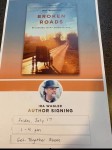
My road trip is coming up. These days, you don’t know if you’ll get there when you start such a journey. Lots of danger lurking out there. There is violence and strife in the cities. You just keep going, I guess, as best you can. This coming week, I’ll be driving Amish Black II all the way out to Iowa. The book signing is still scheduled for Friday, July 17, from 1:00 PM to 4:00 PM at the Get-Togather Room on the north side of the square. You can buy either of my books there or bring the copy you have for me to sign.
Come if you can. This is the first event for Broken Roads. I’m excited.
Share